
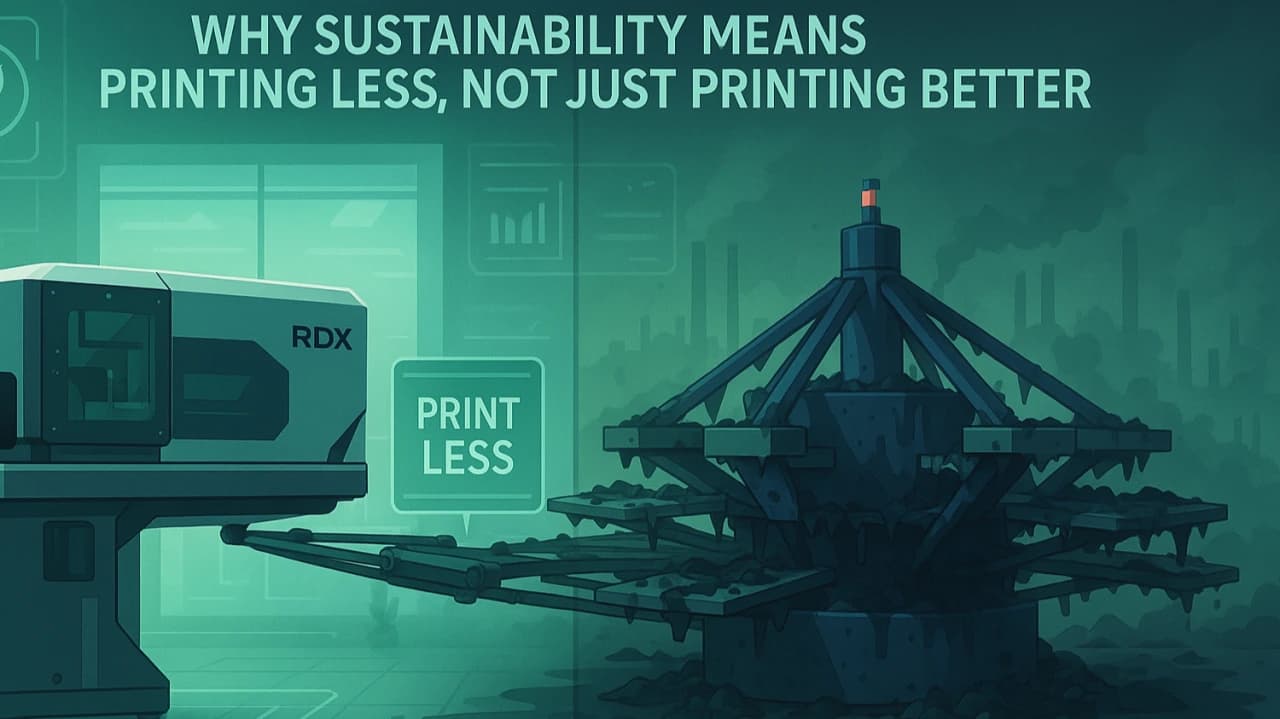
A bold take on reducing waste by embracing need-based production with hybrid digital printing leading the way.
In the textile industry, the term “sustainability” is often tied to better inks, eco-friendly fabrics, or energy efficient machinery. But one of the biggest environmental burdens remains largely ignored overproduction. Printing smarter only works if we also print less.
Mass production leads to unsold inventory, markdowns, and waste. Sustainability isn’t just about how we print it’s about how much we print.

The Overproduction Problem
Traditional screen printing requires multiple screens and high setup costs, making it viable only for bulk quantities. This encourages brands to overproduce, hoping to sell in volume. But what doesn’t sell becomes dead stock piling up in warehouses or ending up in landfills.
The Hybrid Solution: Cost-Effective Low-MOQ Printing
This is where hybrid digital printing steps in not as a replacement for screen or DTG, but as the perfect bridge between the two. By combining the speed and effects of screen printing (like glitter, foil, and puff) with the versatility and color range of digital printing, hybrid machines enable cost-efficient production for as low as 50 pieces, even for complex, high-fashion designs.
Here’s how hybrid supports sustainable, need-based production:
1. Low Minimums with High Impact
Instead of printing thousands of units, brands can now confidently produce 50 to 100 pieces even for intricate designs using just one screen for underbase and a few for value additions. The millions of digital colors eliminate the need for multiple color screens.
2. Flexibility for Fast-Moving Trends
With quick changeovers and minimal setup, hybrid machines let brands respond to market demand and trends without overcommitting inventory.
3. Value Additions Without Volume Pressure
Hybrid makes it viable to add fashion-forward elements like foil, puff, or glitter on small orders something that was once only economical at scale.
4. Less Waste, Smarter Inventory
Lower MOQs mean less overstock, less fabric waste, and fewer unsold garments. It’s a smarter way to manage resources and reduce environmental impact.
The Way Forward
Sustainability in fashion printing isn’t just about switching inks or machines it’s about changing the mindset. Hybrid printing enables a practical, profitable way to embrace low-volume, high-variation production that aligns with real customer demand.
At RDX, we believe the future belongs to intelligent manufacturing where efficiency meets creativity and sustainability. Hybrid printing doesn’t just make fashion faster. It makes it leaner, cleaner, and smarter.




